
Bedford Through Time
History, heritage, gardens, and the quiet character of the Eastern Cape
4,000 years ago
The Untamed Wild
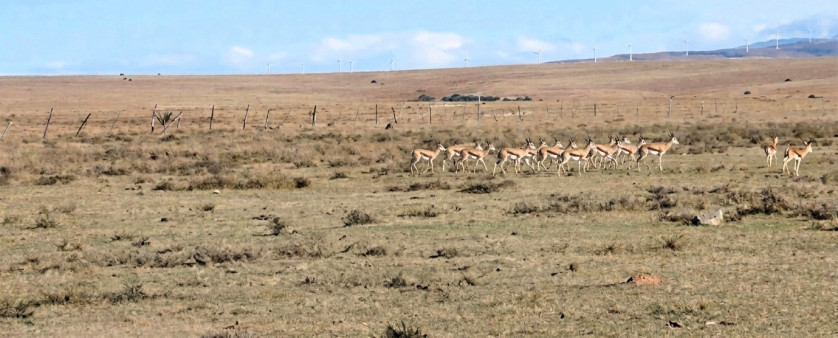
Long before the town existed, the San and Bushmen roamed these plains. The landscape was a pristine wilderness where elephants, lions, and leopards moved freely across the grasslands. For more than twenty thousand years, the San hunter-gatherers lived in absolute equilibrium with this environment. They read the subtle shifts of the seasons to follow the great seasonal migrations of game, moving systematically between the lush summer grazing near the coast and the sheltered winter valleys inland. Rather than seeking to master the wilderness, they survived by adapting to it—using highly advanced tracking techniques and poisoned arrows tipped with local plant extracts to hunt large antelopes like the eland, which they revered as a sacred symbol of spiritual potency. Water was meticulously conserved in hollowed-out ostrich eggshells buried deep beneath the arid soil to sustain them during the dry months.
It was a world defined by the rhythm of nature, untouched by fences or borders, where the vast Eastern Cape sky served as the only roof for the nomadic tribes who first called this region home.
Did you know? The area was once home to wild dogs and eland, roaming freely across the open veld.
Mid-1700s
The Meeting of Worlds
As the 18th century progressed, the region saw the arrival of Trekboers seeking new land and Xhosa groups navigating their own tribal shifts. By 1779, a fragile boundary was negotiated along the Fish River and the Kaga Mountains. This era was marked by both trade and tension, as two distinct cultures began to overlap in the fertile valleys, setting the stage for the complex history of the Eastern Cape frontier.
Driven by the need for fresh grazing land for their massive herds, Trekboers (migrant Dutch farmers) advanced relentlessly eastward from the Cape peninsula. Simultaneously, the westward expansion of Xhosa chiefdoms—spurred by internal political rivalries, succession disputes, and population growth—led them into the Zuurveld, the fertile coastal strip west of the Great Fish River. Neither group viewed the landscape as an empty wilderness; instead, both recognized it as prime real estate for pastoral economies centered entirely around cattle, which served as the primary measure of wealth, status, and survival for both cultures.
Did you know? The Fish River was established as a formal boundary between the Dutch settlers and the Xhosa people in 1779.
1854
A Library's Legacy
Bedford was officially established in 1854 under unusual circumstances. Sir Andries Stockenstroom, a man who sought peace during the turbulent Frontier Wars, found his library burned by soldiers who mistrusted his motives. To fund the restoration of his precious books, he sold portions of his farm, Maastroom. Today, that historic farm remains a testament to his resilience and is still open for visitors to explore.
As the Lieutenant Governor of the Eastern Province of the Cape Colony, Sir Andries Stockenström occupied a precarious and deeply controversial political position. Unlike many of his contemporary colonial administrators who favored aggressive military expansion, Stockenström advocated for a far-sighted, more conciliatory approach that sought to respect indigenous Xhosa territorial boundaries. This sympathetic stance earned him fierce enmity from both British authorities and local settler frontiersmen. During the devastating War of Mlanjeni (the Eighth Frontier War), this bubbling resentment boiled over. Believing his peaceful diplomacy was tantamount to treason, British and colonial soldiers targeted his homestead, deliberately torching his private residence along with a world-renowned, massive personal library.
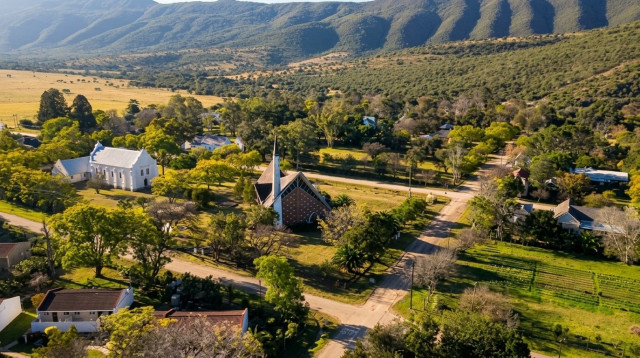
Devastated by the loss of his irreplaceable literary and historical collection, Stockenström devised a creative solution to rebuild it. In 1854, he subdivided a portion of his expansive personal estate, Maasström Farm, mapping out plots to establish a new frontier settlement. He officially named the emerging town Bedford, in honor of his close friend, the Duke of Bedford. Nestled directly at the foot of the densely forested Kaga Mountain, the town quickly grew into a thriving pastoral hub, attracting a diverse blend of Dutch pastoralists and prominent 1820 Scottish and English settlers.
The enduring legacy of this founding era is spectacularly preserved at the original Maasström Farm Garden, which remains a crowning jewel of the region's heritage.
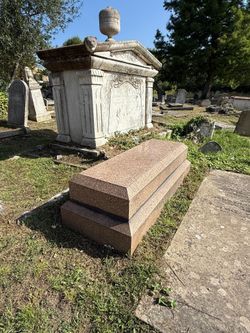
He died of bronchitis that had plagued him for years. He was interred in Kensal Green Cemetery, London. Burial Date 22 Mar 1864.
Did you know? The town was founded specifically to raise money to replace a library destroyed by soldiers.
1820s–1900s
The Rose Heritage
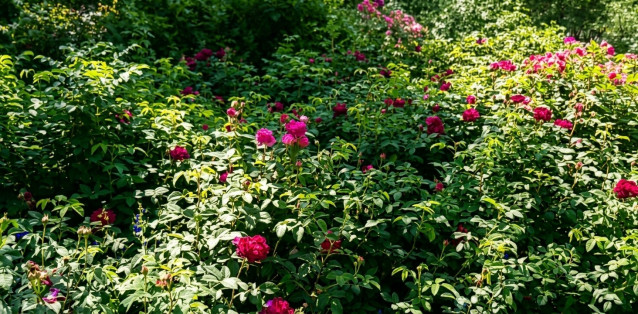
The 1820 British Settlers brought more than just their belongings; they brought the rootstock of old-fashioned roses. These fragrant blooms found a perfect home in the sweet grass of the Smaldeel region. Today, Bedford is a sanctuary for these heritage roses, which thrive in the town's arboretums. These flowers are not just plants; they are living links to the past, preserved by generations of gardeners who cherished their scent and beauty.
When the first waves of British settlers stepped ashore at Algoa Bay in 1820, they carried carefully bundled cuttings of heritage roses—including ancient Damasks, Gallicas, and Albas—wrapped in damp hessian sacks to survive the grueling voyage from Europe.
Did you know? Bedford is home to a unique rosarium that preserves the ancestors of modern rose cultivars.
Modern Era
A Sanctuary of Stone and Spirit
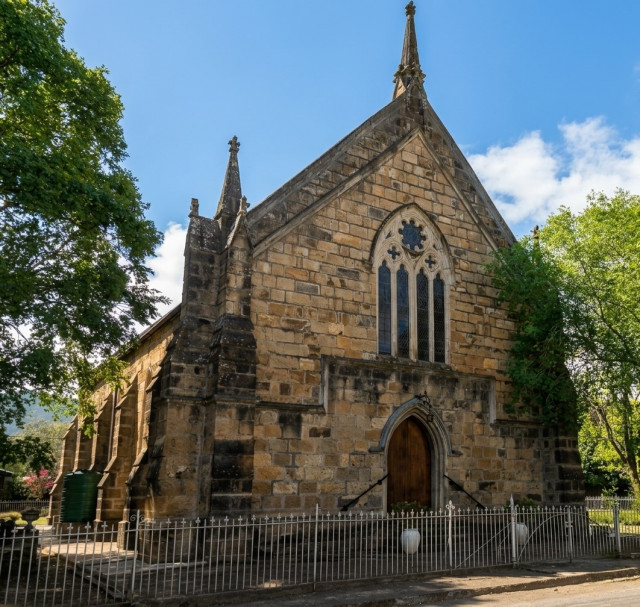
Today, Bedford is a quiet, rural town defined by its historic architecture and community spirit. From the St John's Catholic Church to the Presbyterian Church's Wall of Remembrance, the town is a place of reflection. Visitors are drawn to the area to experience authentic South African farm living, finding peace in the shadow of the Winterberg range and the quiet dignity of the town's well-preserved cemeteries and heritage sites.
The town's architectural layout functions as a structural timeline of the Eastern Cape frontier. Lining the wide, tree-lined streets of the older municipal center are masterfully preserved examples of 1820 Settler-style homes and neoclassical civic architecture. Notable structures like the Standard Bank building and the historic Duke of Bedford Hotel, which has anchored Hope Street since 1899, showcase the distinct dressed-stone masonry characteristic of the era. Even early industrial spaces have been retained; the town's original, late 19th-century furniture factory has been thoughtfully repurposed as De Oude Fabreeck, serving as a modern local gathering place while preserving its foundational woodworking heritage.
The spiritual and reflective character of Bedford is anchored by a cluster of historic churches that stand shoulder-to-shoulder along its central roads. The St. John’s Catholic Church, situated at the corner of Hope and Ernst Nel Streets, presents a striking oblique stone facade that remains a major drawcard for architectural historians.
Did you know? Bedford is a popular destination for those seeking an authentic rural farm-stay experience.
Contemporary
Blooming Traditions
Bedford has transformed its floral heritage into a celebrated annual Garden Festival. The town serves as a living museum where the past is not just remembered but cultivated. Whether exploring the arboretum of tall trees or walking the streets where history is etched into every building, travellers find a town that balances its complex colonial history with a vibrant, blooming present.
The cornerstone of this modern transformation is the Bedford Country Gardens festival, an event that has evolved over twenty-three years into one of South Africa’s most anticipated rural gatherings. Held annually across two long weekends in late October and early November, the festival sees approximately 16 private gardens open their gates daily to thousands of national and international visitors. The entire experience is strategically organized into four distinct routes—the Town Route, Mountain Route, Cowie Valley Route, and Heading West Route—which elegantly connect manicured village plots with massive, historic farmsteads hidden deep within the mountain folds.
Rather than standard commercial nurseries, the festival relies on the unique environmental tapestry of the region. The routes actively straddle grassland, montane forest, and Karoo biomes. This geographic diversity allows visitors to view an extraordinary spectrum of flora, ranging from hyper-curated, water-wise succulent landscapes to historic farm properties like Cavers, Belmont, and Maasström where ancient oaks and yellowwood trees provide a protective canopy for generations-old flowerbeds. In town, the SA Rosarium at the Camelot Arboretum acts as the biological anchor, preserving over 2,000 heirloom roses that are genetic precursors to modern commercial cultivars.
The community spirit of Bedford effectively bridges its frontier past with its creative present.
Did you know? The town is widely recognized for its annual Garden Festival and historic rosarium.

Bedford Today
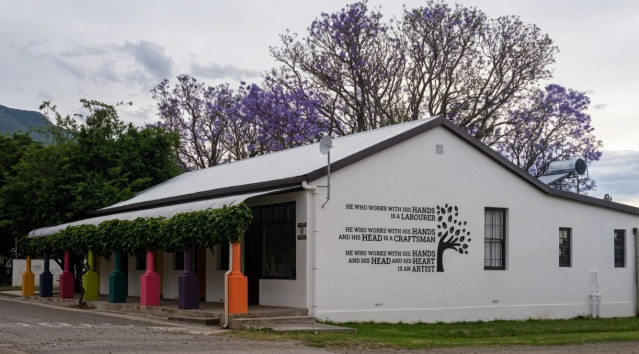
Bedford is a quaint town in the Eastern Cape of South Africa, nestled at the foot of the Kaga Mountains. Established in 1854, it is renowned for its Victorian architecture, annual Garden Festival, and vibrant community spirit.
The town was founded by Sir Andries Stockenström on a subdivided portion of his ancestral farm, Maasström. Stockenström strategically established the settlement to raise critical funds to replace his world-class personal library, which colonial soldiers had burned to the ground during the War of Mlanjeni.
45
/100
Based on amenities, accessibility, interest, and visitor sentiment.
The character of Bedford
Bedford’s story is not only found in dates and buildings. It lives in the relationship between the Kaga Mountains, the town’s old trees, its gardens, and the people who continue to care for its heritage. The result is a place that feels calm, cultivated, and deeply connected to its past.
The Duke of Bedford Hotel, the annual Garden Festival, and the town’s Victorian streetscapes offer natural starting points for exploring this history. Together, they reveal a community shaped by agriculture, architecture, horticulture, and a respect for the slower rhythms of country life.


© Swerweling
2026